Melē Skincare and Design for America
Overview
Melē is a science-based skincare brand that caters to melanin-rich skin.
Design for America (DFA) is a network of innovators using design thinking to create positive social impact.
I helped these two companies create a positive impact on melanin-rich skincare consumers by exploring ways to help consumers feel confident in their skincare practices, while also implementing a new design thinking approach.

Role & Team
Volunteer User Experience Designer
I worked with a group of 4 other designers (2 graphic designers and 2 user experience designers) for 2 months. We met via Zoom for weekly stand-ups & collaboration throughout the project.

Responsibilities
Secondary research, Primary research, Synthesizing survey results, Ideation, and Storytelling

Tools
Figma, Google Workspace, Zoom, Miro
Experience Design
Solution: At a Glance
As a team, we focused on coming up with the best way to make a positive impact on melanin-rich skincare consumers. Throughout our design process, we discovered that a Mele Skincare conference would be very effective. The conference would offer a wide range of activities based on skincare, self-love, and community.
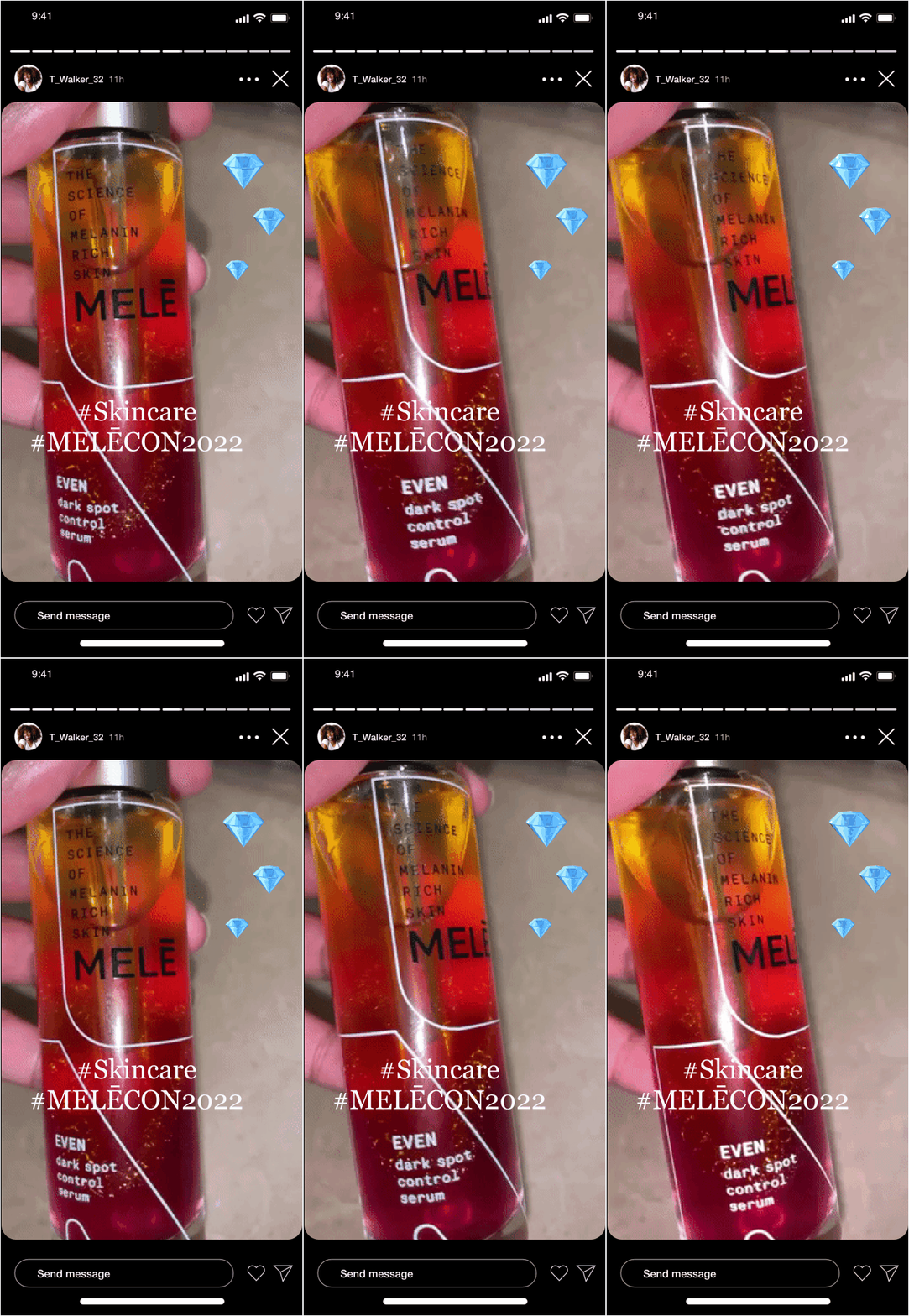
In our pitch, we experienced the event through the eyes of an attendee.


Finding the problem
The design challenge began with Design for America presenting us with a general How Can We Statement so that we could begin to immerse ourselves in the problem space.
"How can we build an authentic skincare movement that centers science, self-esteem, and health practices so everyone can love the skin they're in?"
Our team’s first step was doing various types of research to narrow down the problem at hand.
1. Ethnographic research helped us gain empathy and understanding from our users by analyzing our own attitudes and practices regarding skincare. As a team, we talked through our answers to the following questions:
Where are you in your skincare journey?
How do you typically discover new products?
Can you describe a time you felt empowered in your skincare journey? What contributed to it?
What excites you about skincare?
How likely are you to try new skincare products?
Can you describe a time you felt discouraged in your skincare journey? What contributed to it?
2. We did secondary research to get insight into the skincare market for Black consumers, product discovery, skincare movements, and more. This helped us focus on what we wanted to learn about the user experience of skincare.

3. Finally, we launched a survey as primary research. This revealed the "WHY?" behind consumers' skincare practices and gave insight into their values. We discovered users' main priorities when it comes to skincare products are:

Simple routines that don't include tons of products

Products that visibly improve the skin

Products that provide moiusture
Reframing the problem
Now that we identified what consumers valued, we were able to brainstorm different ways to expand their knowledge and confidence when shopping for skincare.
We did this by reframing our general how can we statement into statements that comment on specific problems consumers may face.
"How can we help the average consumer understand what products work best for their skin and why?"
"How can we help the average consumer simplify their skincare regimen?"
"How can we foster a sense of community among skincare consumers so that they engage with a specific brand over the long term?"
"How can we educate users about Melē products so that they choose them over competitors?"
Envisioning the solution
During this phase, we generated ideas individually and then came together for a final ideation sprint. In this exercise, we:
-
Grouped our ideas based on common themes
-
Had a group vote to identify our top 5 ideas
-
Discussed our reasoning for voting and advocated for ideas we felt were overlooked

We moved forward with the concept of a conference because it could incorporate many of our favorite ideas at once. Then, we ideated on the types of events that should occur at the conference and how they would benefit attendees.
We utilized the 5E Experience Model to further define our event and uncover potential pain points.

We discovered a couple of pain points through this exercise and discussed ways to avoid them.
A skincare conference may attract a specific type of attendee.
To attract a diverse audience to the conference, we employed a multifaceted approach, catering to a variety of interests and preferences.
To ensure inclusivity and cater to attendees from all backgrounds and levels of skincare knowledge, we incorporated a wide range of activities throughout the event.
A conference could be an experience without a lasting impact.
To maximize engagement for Melē and foster long-term connections with attendees, we devised strategies to extend the conference experience beyond its physical boundaries.
Testing the solution
To test the viability of our conference idea, we reached back out to our original survey participants to gauge interest in the event and figure out what they would expect from the experience.
The results proved a significant interest in attending a skincare conference, but the highest deterrent was the costs associated with attendance (tickets, travel, etc.).
We used other statistics from the survey, along with the ideas from our previous ideation sprint, to narrow down the specifics of the event and clearly define what we wanted users to take away from the experience.

Once we had a defined event, we were able to create attendee personas based on our survey respondents.


Conclusion
We decided to follow Tyesha as she experienced the first annual Melēcon! Our pitch for the event is a story from the point of view of a general attendee documenting the experience via Instagram Stories.
Please watch as she develops a new love for a skincare brand that instills confidence, a sense of community, and knowledge into its consumers.

My biggest takeaway from this project is the importance of collaboration and time management.
This was my first opportunity to be led by UX professionals in the industry and implement their process of design thinking. It gave me the chance to practice my attention to detail, active listening skills, and communication skills, which helped me learn to operate in a different type of work environment.
One thing my team and I were not prepared for was how quickly the project moved along. This gave me a chance to learn how to think critically and creatively in a time crunch. I was also able to learn from the amount of dedication and organization it took to make this happen by the assignment deadline.
If MELE decided to implement our pitch, the next steps I would like to take would be:
-
Conduct additional research to cover a wider demographic range
-
Determine location, virtual options, partnerships, and associated costs
-
Set ticket prices and begin promoting across a variety of digital and print media
-
Hold the first annual Melēcon!